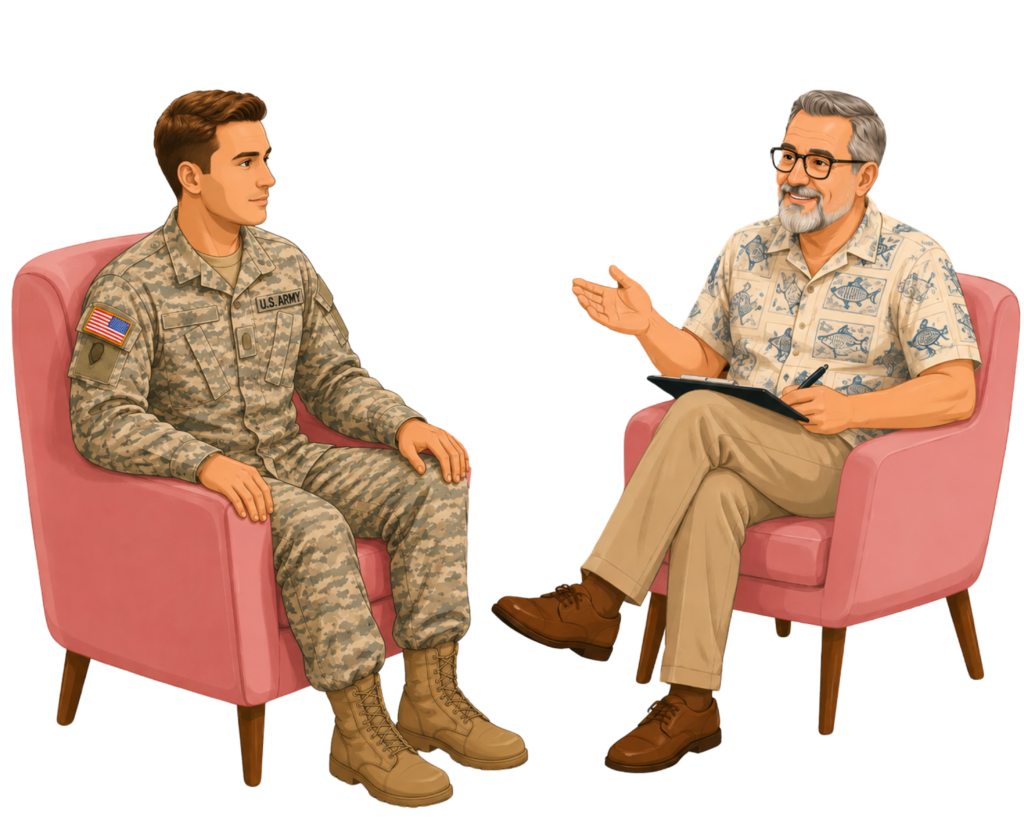
What I Coach
Coaching isn’t about fixing you or diagnosing what’s wrong. It’s about sitting with you while you work through what’s hard. I offer trauma-informed coaching for veterans, active military members, and anyone in the Pacific Northwest carrying experiences they’ve never fully unpacked. This isn’t therapy, and it isn’t a crisis line. It’s an honest, unhurried conversation with someone who’s lived through his own share of hard years and four years of isolation aboard a submarine. Whether you’re facing a rough transition out of service, sitting with old memories, or just searching for direction, I’m here to listen first and walk alongside you at your own pace.
Why Veterans Trust Life Crafters Coaching
- I bring real Navy submarine service to every conversation
- I never diagnose, treat, or replace professional medical care
- I offer a private space free from judgment or pressure
- I focus on clarity, direction, and your next honest step
Trauma Doesn't Discriminate; It Can Touch Anyone's Life Story
Understanding the Hidden Challenges Faced by Service Members
Trauma doesn’t follow a rank, a uniform, or a timeline. It can come from combat, from isolation, from ridicule, or from moments no one else even noticed. I’ve carried my own hard years, dealing with abuse and torment from classmates, shipmates, and even family members who should have known better. Those experiences taught me that pain doesn’t always look the way people expect it to, and healing doesn’t follow a straight line either. Whether you served four years or twenty, whether your hardest moments happened overseas or at home, your experience matters. Coaching gives you a space to talk about it honestly, without needing to justify or explain why it counts
Coaching Support Designed Around Your Needs
Generalized Anxiety Disorder (GAD)
Generalized Anxiety Disorder (GAD) involves ongoing, excessive worry about everyday matters, often accompanied by restlessness, tension, and difficulty concentrating. While it can interfere with daily functioning, GAD is highly manageable with the right treatment.
Social Anxiety Disorder (SAD)
Social Anxiety Disorder (SAD) is marked by an intense fear of social situations, often driven by concerns about being judged, embarrassed, or scrutinized by others. This can impact relationships and daily activities, but therapy can help reduce fear and build confidence.
Panic Disorder
Panic Disorder includes recurrent, unexpected panic attacks—sudden episodes of intense fear that may involve physical symptoms such as a racing heart, dizziness, or shortness of breath. Although disruptive, panic disorder responds well to effective treatment.
Obsessive-Compulsive Disorder (OCD)
Obsessive-Compulsive Disorder (OCD) is characterized by intrusive, unwanted thoughts (obsessions) and repetitive behaviors or mental rituals (compulsions) intended to ease anxiety. This cycle can be exhausting and disruptive, but evidence-based treatments can significantly reduce symptoms.
Post-Traumatic Stress Disorder (PTSD
Post-Traumatic Stress Disorder (PTSD) can develop after experiencing or witnessing a traumatic event. Symptoms may include flashbacks, nightmares, heightened anxiety, and emotional numbness. PTSD can deeply affect daily life, but professional care can support healing and recovery.
Phobias
Phobias involve intense, persistent fears of specific objects or situations—such as heights, flying, or certain animals—that lead to avoidance behaviors. While these fears can be limiting, therapy offers effective strategies to manage and overcome them.
- Trauma-informed coaching for veterans and families
- Support for active military facing transitions
- One-on-one honest, unhurried conversations
- Help processing difficult memories at your pace
- Guidance finding clarity and personal direction
- Contemplative coaching rooted in real presence
- Space to explore faith and reflection openly
- Support rebuilding purpose after military service
- Flexible in-person or phone coaching sessions
- Ongoing support for life's difficult transitions