What Moral Injury Actually Feels Like
Combat asks people to do things that would sit wrong with them in any other context. Pull a trigger. Follow an order you disagreed with. Watch something happen and do nothing because doing nothing was the assignment. Years later, that memory doesn’t fade the way people expect it to. It just sits there, waiting for a quiet moment to surface.
This is where moral injury and PTSD start to look different. PTSD often runs on fear, a nervous system that won’t stop bracing for danger. Moral injury runs on guilt and shame, a sense that something inside you got compromised by what you did, saw, or failed to stop. Some veterans carry both. Some carry only one.
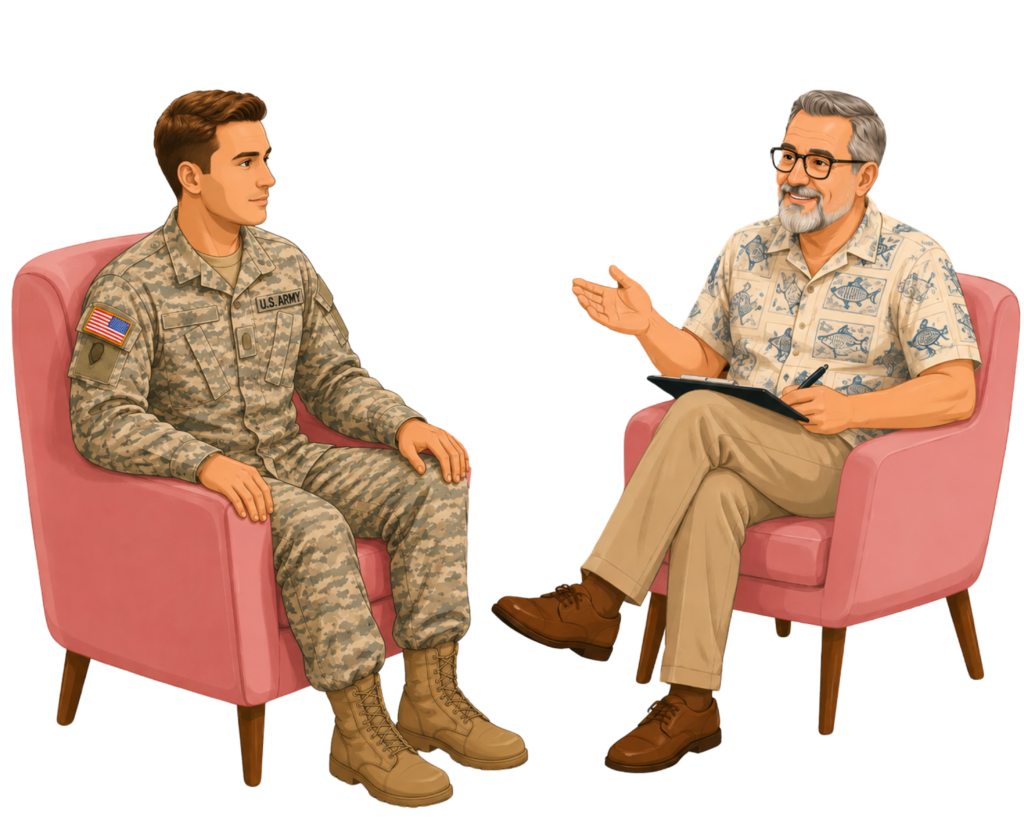
I work as a moral injury coach here in Oregon, and most of the men and women I talk to have never said these thoughts out loud before. Coaching gives you somewhere to finally say them.
What Moral Injury Coaching Sessions Cover
Moral injury shows up differently for everyone. Some veterans replay a single decision. Others carry a general sense that they compromised who they were. Coaching meets you wherever that sits.
- Guilt over orders you had to follow
- Shame about actions taken in combat
- Grief for people you couldn't save
- Anger at leadership decisions you disagreed with
- Loss of trust in your own values
- Conflict between duty and personal conscience
- Difficulty forgiving yourself for split-second choices
- Feeling unworthy of love or belonging
- Spiritual doubt after witnessing atrocity
- Silence around what you saw or did
- Struggling to reconcile faith with wartime choices
- Numbness where guilt should logically be
A Coach Who Really Understand Your Story
An autism evaluation uses evidence-based measures and typically includes:
I served four years aboard Navy submarines, close quarters, high stakes, decisions that mattered. Nothing you tell me will shock me into judgment. I’ve heard hard things before. Shipmates used to come to me when something was eating at them, something they hadn’t told anyone else. That role never left me. Whatever weighs on your conscience, I’m not here to hand out verdicts. I’m here to listen
- Four years of Navy submarine service
- Trusted by shipmates with hard confessions
- Trained in contemplative coaching methods
- Comfortable sitting with guilt and shame
- Faith-based reflection offered when welcomed
- No lectures, no moral scorekeeping
- Sessions available in person or online
Spiritual healing from moral injury doesn’t come from being told you’re forgiven. It comes from finally saying the thing out loud to someone who won’t recoil from it.
What Happens When We Actually Talk
Growing Prevalence and the Power of Early Intervention
You won’t be handed a worksheet or asked to rate your guilt on a scale. Some veterans need to tell the full story before anything else can happen. Others need to circle it slowly, testing whether I’ll react badly before they say the hard part. I let you set that pace, every time.
Coaching isn’t therapy, and I won’t pretend it replaces clinical treatment when that’s what someone needs. What I offer is a place to speak honestly about what happened and where your conscience stands now. If your situation calls for professional care beyond coaching, I’ll say so plainly