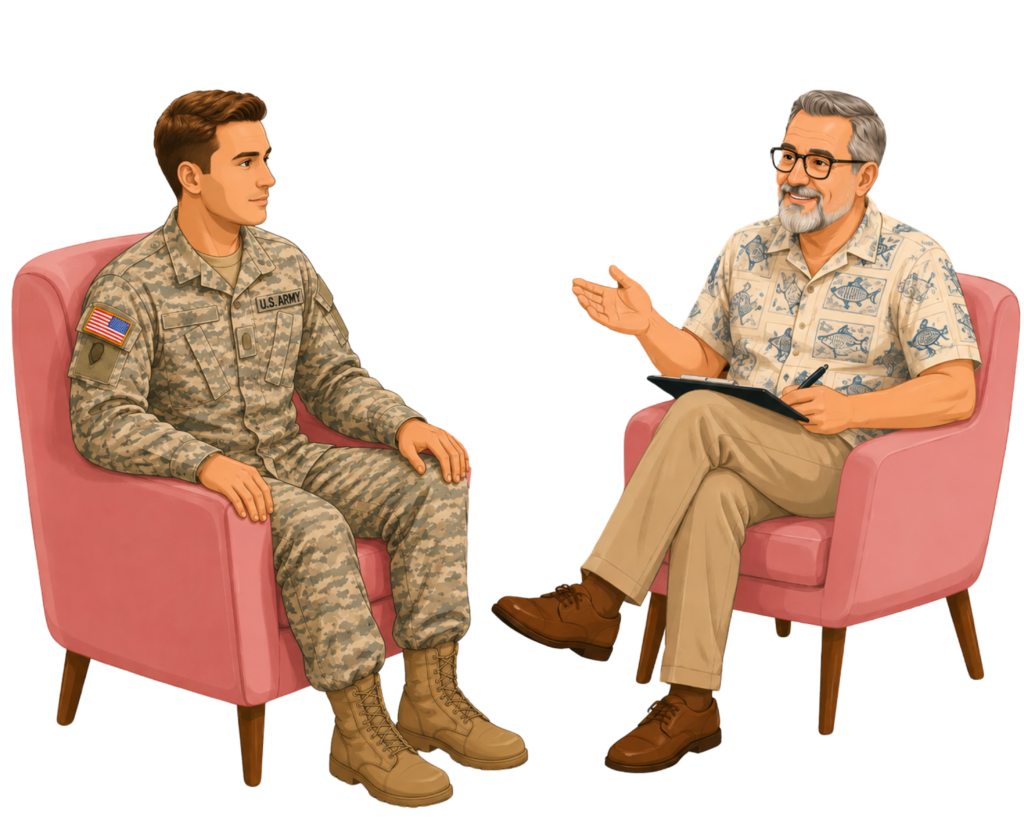
What Veterans Often Carry Home
Service changes people. Most veterans expect that going in. What catches many off guard is how the effects show up years later, in ways nobody warned them about. Trouble sleeping. Flashes of memory that arrive uninvited. A short fuse in situations that never used to bother them. These are common symptoms of PTSD in veterans, and none of them make someone broken or weak.
I work as a PTSD coach for veterans here in Oregon, and I’ve sat with enough people to know these symptoms rarely look the same twice. Some veterans relive specific moments. Others just feel numb, disconnected from people they used to feel close to. Both experiences are real.
PTSD coaching Oregon families search for often starts with a simple question: is this normal, and can anything help? Coaching won’t erase what happened. It gives you a place to talk through it honestly, with someone who understands military life from the inside.
Common Struggles I Help Veterans Work Through
Every veteran's experience with PTSD looks different. Some sessions focus on specific memories. Others center on daily struggles that trace back to service. Here's where coaching often begins.
- Combat-related flashbacks and intrusive memories
- Hypervigilance and constant alertness
- Sleep disruption and recurring nightmares
- Anger or irritability that feels sudden
- Emotional numbness or disconnection from others
- Difficulty trusting people outside the military
- Guilt tied to decisions made in service
- Moral injury from combat experiences
- Strained relationships with family or spouses
- Avoidance of crowds or certain places
- Loss of identity after leaving the service
- Struggles readjusting to civilian routines
A PSDT Coach Who Has Lived Military Life
An autism evaluation uses evidence-based measures and typically includes:
Four years aboard Navy submarines taught me things textbooks never could. That background shapes how I listen, how I ask questions, and how I sit with veterans working through PTSD. I don’t come to this work as an outsider reading about military life secondhand. I served during the Cold War, led shipmates through hard conversations, and learned firsthand how much people need someone steady beside them when carrying something heavy.
- Four years of Navy submarine service
- Firsthand understanding of military culture
- Trained in contemplative coaching methods
- Experience listening to shipmates in crisis
- Faith-informed approach when it fits
- No judgment, no military jargon needed
- Sessions available in person or online
Help for military PTSD works best when the person offering it understands the culture behind the uniform. That understanding is not something I learned in a classroom. I lived it.
What to Expect When We Talk
Growing Prevalence and the Power of Early Intervention
Our first conversation won’t feel like an intake form. I’ll ask what’s going on for you and then listen, without rushing you toward conclusions. Some veterans want to talk through specific memories right away. Others need a few sessions before trusting the process at all. Both are fine.
Coaching does not diagnose or treat PTSD the way a clinician does. What I offer is a steady, judgment-free space to process what you’re carrying and think through your next step. If your situation calls for medical or clinical care, I’ll tell you honestly and point you toward the right resource.