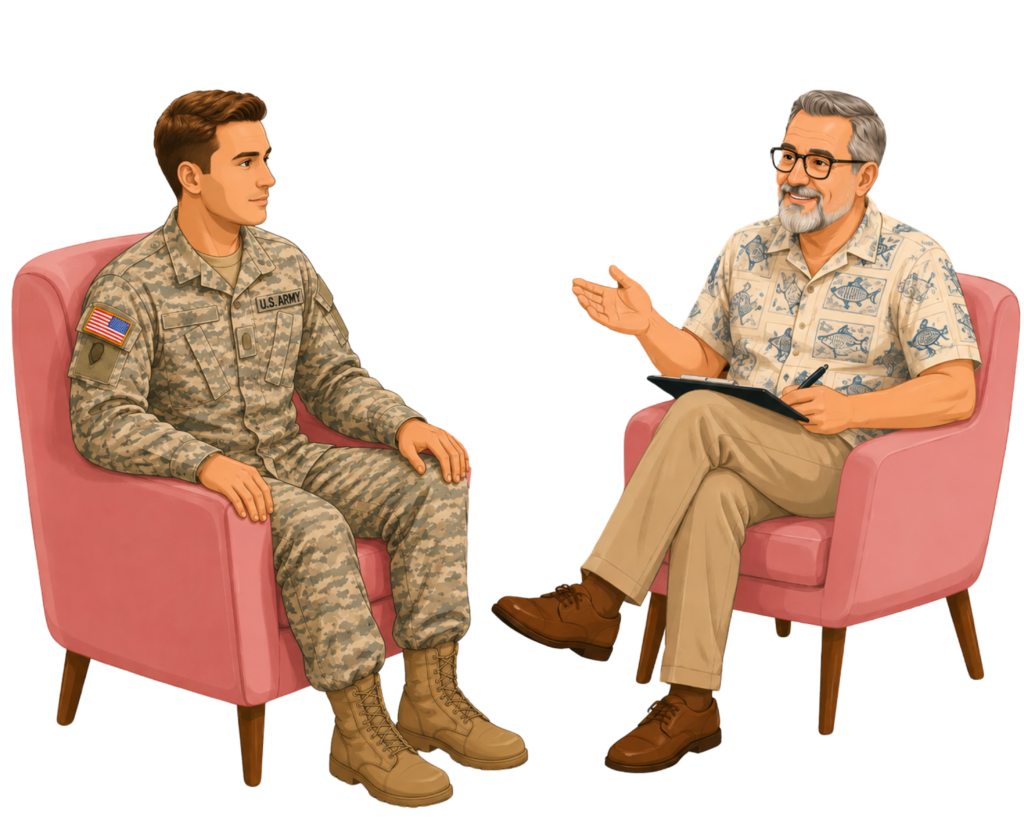
Finding God's Voice Again After a Hard Season
Some people come to coaching wanting practical steps and nothing more. Others come carrying a question that sounds simple but isn’t: where has God been in all of this? I don’t separate the two. My work as a Christian life coach in Oregon treats your faith as part of the conversation, not something set aside until the “real” work begins.
Faith-based coaching for veterans often starts here, because military life can strain belief in ways civilian life rarely does. You’ve maybe prayed in places prayer felt useless. You’ve maybe stopped talking to God altogether, not out of anger exactly, just distance. That distance is allowed to exist in this room.
Spiritual coaching in Gladstone, as I practice it, isn’t about handing you verses to fix what’s broken. It’s about sitting with you long enough to hear what the Spirit might already be saying, even in silence.
What Brings People to Faith-Centered Coaching Sessions
Faith rarely stays neatly in one box. It touches grief, anger, guilt, and confusion. Coaching sessions here often move between the practical and the spiritual without warning.
- Feeling distant from God after hard experiences
- Anger toward God you've never voiced aloud
- Doubt that feels dangerous to admit
- Struggling to pray the way you used to
- Guilt over choices you've asked forgiveness for repeatedly
- Wondering if faith and military service still fit together
- Searching for purpose beyond religious routine
- Losing connection to a faith community after service
- Wrestling with Scripture that once brought comfort
- Feeling unworthy of spiritual restoration
- Wanting discernment for a decision ahead
- Longing for a faith that feels real again
A Coaching Approach Built on Prayer and Presence
An autism evaluation uses evidence-based measures and typically includes:
Long before I called this coaching, I led Bible studies for shipmates who needed more than small talk. That same posture, listening for God alongside the person in front of me, hasn’t changed. Contemplative coaching asks me to hold two things at once: full attention on you, and openness to what the Spirit might be showing us both. That balance takes practice. Years of sitting with people in hard moments taught me how to hold it.
- Rooted in Contemplative Counseling and prayerful reflection
- Scripture woven in only where it fits
- Comfortable sitting with doubt, not just certainty
- Experience leading Bible studies aboard Navy submarines
- No pressure toward a particular denomination or tradition
- Space for questions faith communities sometimes discourage
- Sessions blend practical coaching with spiritual discernment
A Christian trauma coach isn’t meant to hand you answers from a pulpit. My role is closer to a companion, someone who listens for God’s presence in your particular story.
How These Sessions Move Between Scripture and Story
Growing Prevalence and the Power of Early Intervention
Some sessions open in quiet reflection. Others start with you simply talking, and Scripture surfaces naturally somewhere in the middle. I never force a verse into a conversation that doesn’t call for one, and I never assume you want prayer unless you tell me you do. You lead the spiritual pace as much as the practical one.
This isn’t pastoral counseling or clinical therapy, and I won’t pretend it replaces either when your situation calls for something beyond coaching. What I offer is a space where your faith gets taken seriously, doubts included, while we work through whatever brought you here.