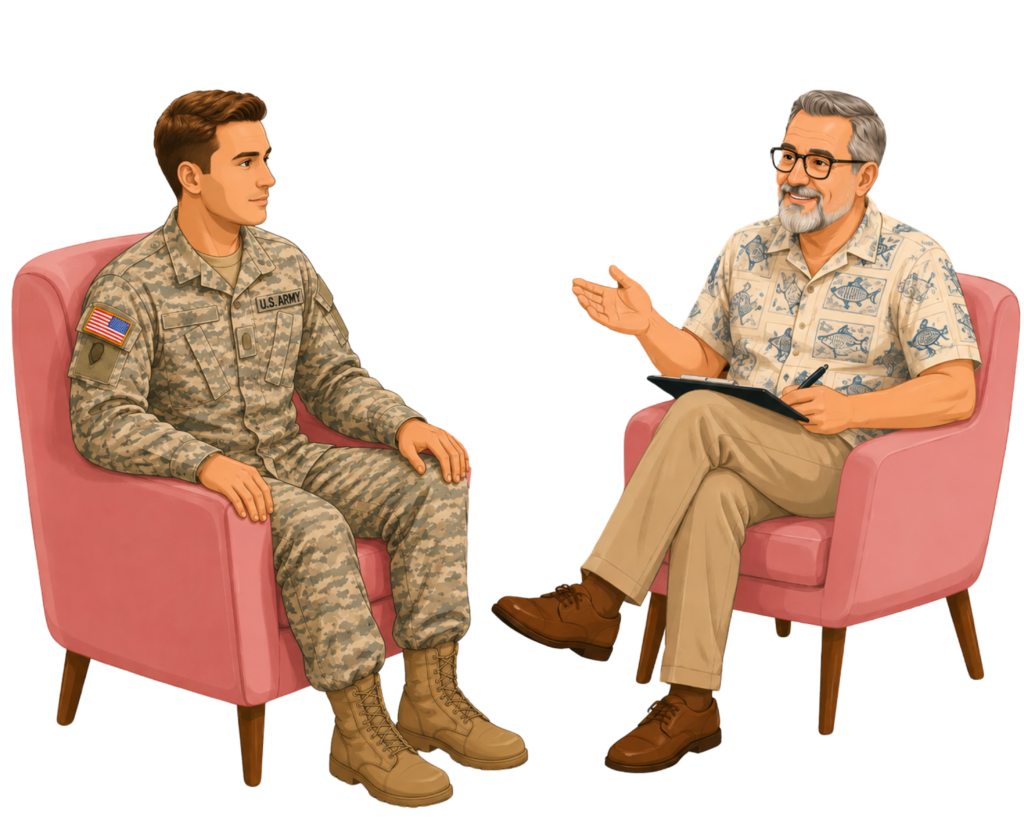
Which Part of Your Service Is Still Weighing on You?
Trauma doesn’t show up the same way twice. For some veterans, it’s a memory that surfaces out of nowhere on an ordinary Tuesday. For others, it’s the tension that never quite leaves the shoulders, or the habit of scanning every room before sitting down. As a trauma coach for veterans in Oregon, I’ve learned that combat trauma, moral injury, and the quieter grief of leaving the service each pull on a different thread, even though they often show up tangled together in the same person.
Combat-related trauma often starts with a memory that won’t stay where it’s supposed to. Moral injury shows up differently, a low-grade guilt about a decision made under pressure that still hasn’t found peace. Identity loss adds its own weight, the strange disorientation of not knowing who you are once the uniform comes off. None of this makes you broken. It makes you someone who carried more than most people ever will, and whose mind is still trying to process it.
Common Struggles I Help Veterans Work Through
Every veteran carries their service differently. Some arrive still gripping the intensity of what they lived through overseas. Others have quietly withdrawn from people, routines, or a version of themselves they don't recognize anymore. Coaching starts by naming what's actually there.
- Intrusive memories connected to service
- Hypervigilance that won't switch off
- Nightmares or trouble sleeping through the night
- Anger that surfaces faster than it used to
- Emotional numbness or feeling disconnected from your own life
- Guilt over decisions made in impossible circumstances
- Moral injury and questions that don't have clean answers
- Strained relationships with spouses, kids, or old friends
- Difficulty trusting people who never served
- A sense of lost identity once the uniform comes off
- Trouble adjusting to the rhythm of civilian life
- Exhaustion from a mind that won't fully rest
What Grounds My Work With Veterans and Service Members
An autism evaluation uses evidence-based measures and typically includes:
I work with veterans, active duty members, and everyone still figuring out what their service means to them now. Trauma doesn’t check someone’s background before it takes hold, and I don’t either. My approach leans on contemplative coaching, staying fully present with you instead of rushing toward a fix. Service-related trauma often needs to be understood before it can be managed, and understanding takes patience, not a checklist of techniques applied too fast.
- Four years of Navy submarine service, Cold War era
- Contemplative coaching, not rigid technique-based sessions
- Firsthand understanding of military culture
- Space to talk through moral injury without shame
- Support for veterans at any stage of adjusting to civilian life
- Faith-informed reflection available if you want it
- No jargon required, no need to explain your service
This work goes better when nobody treats what you carry as strange. I’ve sat with enough of it to know it always makes sense from inside it.
What Actually Happens in Our Sessions
Growing Prevalence and the Power of Early Intervention
Our first session usually starts with a simple question, something like what’s actually been sitting with you lately. From there, I listen for patterns rather than jumping straight to solutions. Some veterans want tools right away, ways to manage a flashback, ground themselves, or get through a rough night. Others need to talk through the weight of it before anything practical makes sense.
Coaching isn’t a substitute for clinical treatment if what you’re carrying needs that level of care, and I’ll tell you plainly if that’s the case. What I offer is a steady, judgment-free space to work through what’s happening and figure out a workable next step.