What Happens When the Shift Ends but Your Mind Doesn't
The uniform comes off, but something stays on. That’s usually how it starts for the officers and firefighters I talk with. You clock out, you go home, you sit down for dinner, and some part of you is still scanning the room, still braced for the radio to go off.
I work with police and firefighters carrying PTSD here in Oregon, and there’s no single shape to it. For some, it’s one call that won’t stop replaying. For others, it’s quieter than that, an accumulation of every bad scene stacked on top of each other until the weight just becomes normal. A few people I’ve sat with can’t even point to the moment it started. It just built.
None of that means something’s wrong with you. It means your nervous system did exactly what it was trained to do in situations most people never have to face, and it hasn’t figured out how to power back down.
How PTSD Can Affect Life After the Shift
Some of this you'll recognize immediately. Some of it shows up sideways, through your temper or your marriage or your ability to sit still, and it takes a while to trace it back to the job.
- Intrusive memories from specific calls or scenes
- Hypervigilance, that constant low-level scanning for danger
- Startle reactions to sirens, sudden noise, sudden movement
- Sleep that never feels like real rest
- Irritability or anger that surfaces faster than it should
- Emotional numbness, feeling checked out from your own family
- Guilt over outcomes you couldn't control
- Avoiding certain calls, locations, or types of scenes
- Difficulty trusting people who've never worn the uniform
- Replaying decisions made in seconds, wondering if they were right
- Trouble being present, even during good moments off duty
- Strain building in marriages, friendships, and parenting
Why I Work With First Responders
An autism evaluation uses evidence-based measures and typically includes:
I served four years on Navy submarines during the Cold War. I’ve never run into a burning building or answered a domestic violence call, and I won’t pretend otherwise. What that service gave me was a real understanding of sustained pressure, tight structure, and what it costs a person to hold things together shift after shift with no easy off-switch. That translates more than people expect. What I offer is patience, genuine respect for what the job demands, and a willingness to sit with whatever you bring in without flinching.
- Four years of Navy submarine service, Cold War era
- Trained in contemplative coaching methods
- Real understanding of high-stress, high-structure work
- Comfortable with silence and comfortable with hard subjects
- Faith-informed approach available, never forced
- No jargon required, no need to explain the job
- In-person sessions in Gladstone, or online if that fits your schedule better
Recovery from this kind of trauma rarely moves in a straight line. Some weeks feel like progress. Some weeks feel like you’re back at square one. Both are part of it.
What to Expect When We First Talk
Growing Prevalence and the Power of Early Intervention
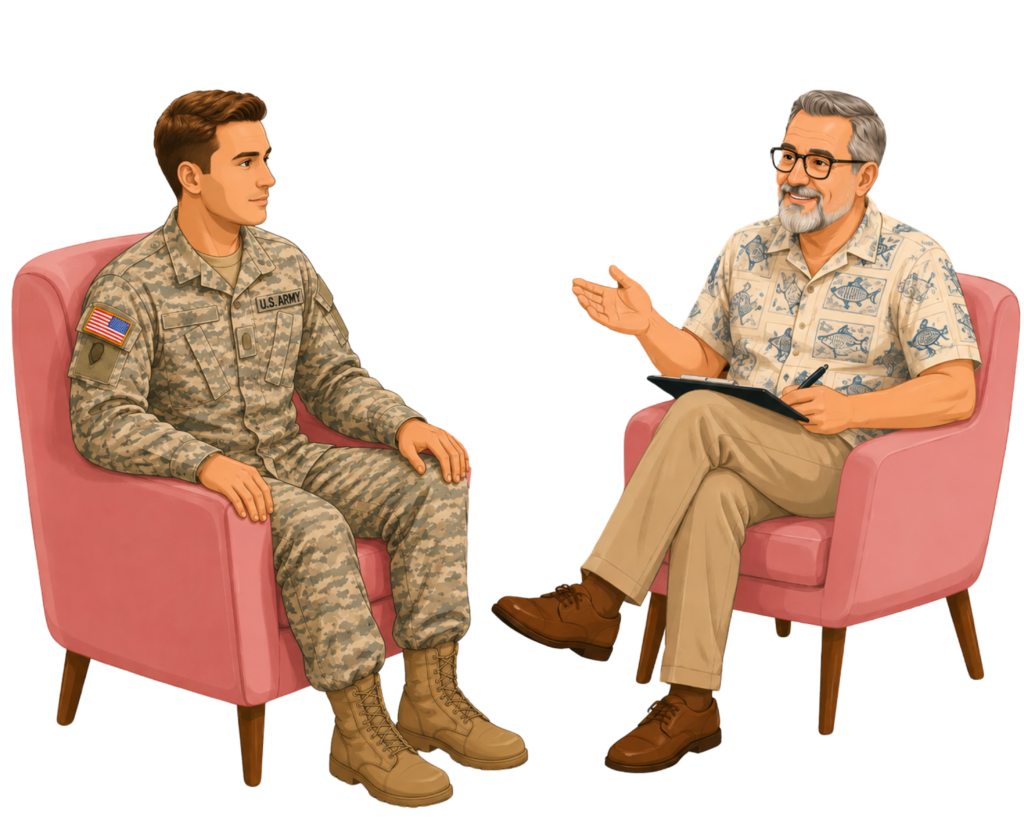
There’s no intake form waiting for you. I’ll ask what’s been going on and actually listen, instead of steering things toward a conclusion I’ve already decided on. Some officers and firefighters want to get into the specific call right away. Others need a few sessions of just building trust before any of that surfaces.
I’ll also be straight with you. Coaching isn’t therapy, and it’s not a substitute for clinical treatment if your situation genuinely calls for it. I won’t diagnose PTSD or treat it the way a licensed clinician would. If I think you need that level of care, I’ll tell you, and I’ll help point you toward it. What I can offer is steady ground. A place where the weight of the job gets heard without judgment, and where we work through what moving forward actually looks like for you.