Are the new ways better?
Hypervigilance is that feeling of being constantly on guard, like part of you never fully powers down even when nothing is actually wrong. It’s more than being alert. It’s a persistent state of scanning for danger that doesn’t match what’s actually happening around you. Hypervigilance symptoms often show up after trauma and are commonly linked to PTSD and anxiety, though they can develop in other contexts too. This article walks through what hypervigilance actually looks like, what causes it, and when it’s worth reaching out for support.
What Is Hypervigilance?
At its core, hypervigilance is the nervous system staying locked in threat-detection mode long after any actual threat has passed. The brain keeps scanning, keeps bracing, keeps assessing, even in situations that are objectively safe.
This is different from ordinary alertness. Most people are naturally more watchful in unfamiliar places or genuinely risky situations, and that’s healthy. Hypervigilance is what happens when that heightened state becomes the default rather than the exception, showing up during ordinary, low-risk moments where it doesn’t belong.
Hypervigilance vs. Being Cautious
Caution is situational. You’re careful crossing a busy street, alert walking through an unfamiliar parking lot at night. Hypervigilance doesn’t wait for a reason. It’s there in the grocery store, at the dinner table, trying to fall asleep. The threat isn’t present, but the body hasn’t gotten the message.
What Are the Common Hypervigilance Symptoms?
Hypervigilance symptoms tend to cluster around a few recognizable patterns. Constantly scanning the environment, checking exits, watching doors, keeping tabs on who’s around you, is one of the most common. Feeling on edge or simply unable to relax, even in comfortable settings, is another.
Being easily startled goes along with this, along with strong reactions to sudden sounds that others might barely notice. Difficulty concentrating shows up frequently, since so much mental energy is being spent on monitoring for threats. Irritability and a short fuse are common companions. Sleep tends to suffer significantly. Restlessness, a sense of unease even without any real danger present, and a persistent feeling that something bad is about to happen round out the picture. Some people specifically avoid sitting with their back to a door, and repeatedly checking surroundings becomes almost automatic.
Physical Symptoms of Hypervigilance
The body carries this too. Muscle tension that doesn’t ease up. A racing heartbeat that spikes without clear cause. Sweating, shaking, and a fatigue that comes from being physiologically activated far more than the situation calls for. Relaxing, actually relaxing, becomes genuinely difficult.
Emotional and Behavioral Symptoms
Emotionally, hypervigilance often brings irritability, fear that doesn’t have an obvious source, generalized anxiety, and avoidance of situations that feel unpredictable or overstimulating. Emotional exhaustion builds over time. Feeling safe around other people, even people who’ve never given any reason for distrust, can become difficult.
What Causes Hypervigilance?
Trauma and PTSD
Traumatic experiences can leave the nervous system stuck in an ongoing threat response, primed to detect danger long after the actual danger has passed. This is one of the most well-documented pathways to hypervigilance.
Anxiety Disorders
Chronic anxiety, separate from a specific trauma history, can also produce sustained heightened alertness as the mind stays fixed on anticipating what might go wrong.
High-Stress Environments
Certain occupations and situations involve repeated exposure to real danger over time, training the nervous system toward constant readiness in a way that doesn’t easily switch off.
Traumatic or Life-Changing Events
Accidents, violence, disasters, and other frightening experiences, even single incidents, can trigger a lasting shift toward hypervigilant patterns.
Is Hypervigilance a Symptom of PTSD?
Yes, hypervigilance is commonly associated with PTSD and is recognized as one of its hallmark symptoms. After trauma, the nervous system can remain primed for danger as a kind of protective adaptation that outlasts its usefulness.
That said, hypervigilance on its own doesn’t confirm a PTSD diagnosis. It often appears alongside other symptoms, including intrusive memories, avoidance behaviors, sleep problems, and noticeable emotional changes. A proper evaluation looks at the full picture rather than any single symptom in isolation.
How Hypervigilance Can Affect Everyday Life
The impact spreads well beyond feeling tense. Sleep, work performance, relationships, parenting, social situations, concentration, and the basic ability to relax or feel present can all be affected.
Hypervigilance and Sleep
A nervous system that won’t stand down makes it hard to fall asleep and just as hard to stay asleep. Being alert is, in a sense, the opposite of what sleep requires.
Hypervigilance and Relationships
Irritability, emotional withdrawal, difficulty trusting, and an inability to fully relax around other people can all create friction in relationships, even ones that are otherwise healthy and supportive.
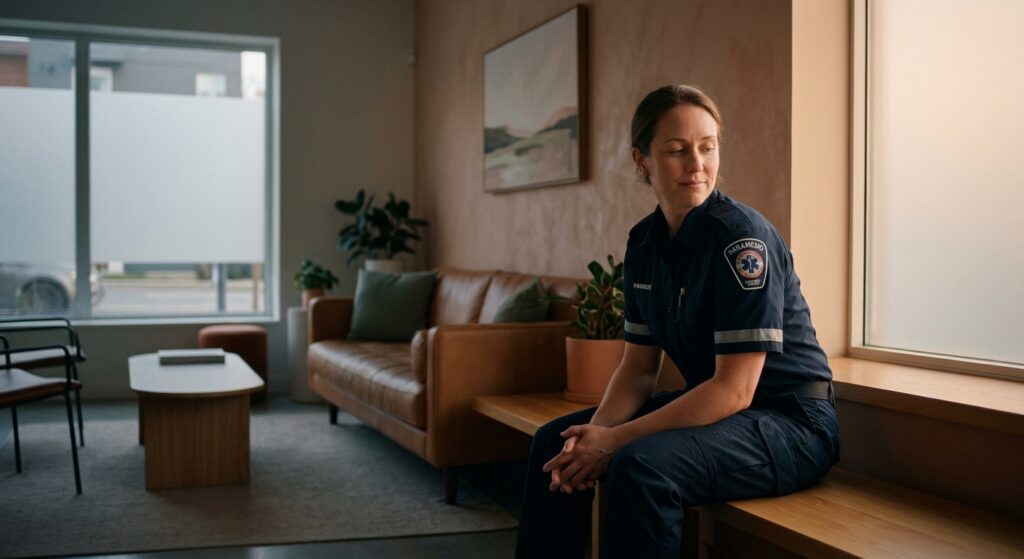
Hypervigilance Symptoms in Police Officers and Firefighters
First responders often carry a particular version of this. Staying alert well after a shift has ended. Reacting strongly to sirens or sudden noises that echo the sounds of the job. Constantly assessing surroundings out of habit rather than necessity. Difficulty shifting out of work mode once home. Replaying difficult calls. Sleep difficulties and emotional exhaustion that build over time.
Not every first responder experiences this to the same degree, and it’s not universal. But for those who do, it’s a genuine and understandable response to years of training the nervous system to stay ready.
When Should You Seek Help for Hypervigilance?
Professional support becomes appropriate when hypervigilance symptoms persist over an extended period, interfere with sleep, affect work performance, strain relationships, or make relaxing feel nearly impossible. If symptoms developed after a traumatic experience or seem to be getting harder to manage rather than easier, that’s a signal worth taking seriously.
Coaching support can help with practical strategies and day-to-day management. Clinical mental health treatment is appropriate when symptoms are severe, persistent, or connected to a broader condition like PTSD that needs professional diagnosis and treatment.
How Can Hypervigilance Be Managed?
A few approaches tend to help. Learning your specific triggers so the response feels less random and more understandable. Building consistent sleep habits, since sleep and nervous system regulation are closely linked. Grounding techniques that bring attention back to the present moment. Taking breaks from overstimulating environments when possible.
Maintaining supportive relationships matters too, along with physical activity when appropriate for you. Talking with a qualified professional and seeking clinical care when symptoms warrant it, rounds out a reasonable approach. No single technique resolves hypervigilance completely on its own. It usually takes a combination, along with time.
Frequently Asked Questions
Constantly scanning surroundings, feeling unable to relax, being easily startled, irritability, sleep problems, and a persistent sense that something bad might happen are among the most frequently reported symptoms.
Yes, it’s a recognized hallmark symptom of PTSD, though it can also occur with anxiety disorders or after high-stress experiences without a formal PTSD diagnosis.
It feels like being unable to fully relax, constantly bracing for something to go wrong, with physical tension, a racing heart, and a mind that won’t stop scanning for danger.
Yes. Chronic anxiety, separate from trauma, can produce sustained heightened alertness as part of ongoing worry and anticipation of potential threats.
It varies significantly. For some people it’s temporary following a specific stressful period. For others, particularly after trauma, it can persist for months or years without proper support.
Getting Support for PTSD in First Responders
PTSD in first responders is common, underreported, and treatable. Recognizing the warning signs, understanding the risk factors, and knowing when symptoms have crossed from manageable to something that requires professional attention are all meaningful steps. Emergency personnel carry an enormous amount so that others don’t have to. That service doesn’t require suffering in silence. Anyone experiencing persistent PTSD symptoms is encouraged to speak with a qualified mental health professional who can provide appropriate, individualized support.
Positive Motivators
- Henry Wadsworth Longfellow, The Contemplative Counselor; Fortress Press, 2011, p 64
- New American Standard Bible: 1995 update. (1995). (Jn 16:13). La Habra, CA: The Lockman Foundation.
- Ibid, Psalm 46:10
- Nolasko, Rolph R. jr; The Contemplative Counselor; Fortress Press, 2011; p 61
- Ibid
- LifeCrafters Coaching & Support Services LLC
- www.lccoach.org
- david.hooker@lccoach.org
- 503-344-6348
Speaking with clarity and honesty creates space for understanding and meaningful connection.

Author, David Hooker
Timing matters. Important conversations are most productive when both partners are calm, available, and emotionally regulated. Avoid raising sensitive topics during moments of stress or exhaustion. Creating intentional space for conversations allows both partners to engage thoughtfully and respectfully.
Handle Conflict Constructively
Disagreements are normal in any relationship. Focus on addressing the issue rather than criticizing your partner. Stay curious about their perspective, take responsibility for your part, and avoid absolutes like “always” or “never.” Working as a team toward solutions strengthens resilience and mutual respect.
Show Appreciation and Affection
Positive communication isn’t just about resolving problems—it’s also about reinforcing connection. Regularly expressing gratitude, affection, and acknowledgment helps your partner feel valued. Small gestures of appreciation can soften difficult conversations and create a more supportive emotional climate.
Bringing It All Together
Improving communication takes time, patience, and practice from both partners. By listening with intention, speaking honestly, choosing the right moments, managing conflict thoughtfully, and showing appreciation, you create a stronger foundation for connection. Small, consistent changes in how you communicate can lead to deeper understanding, greater emotional safety, and a more fulfilling relationship.