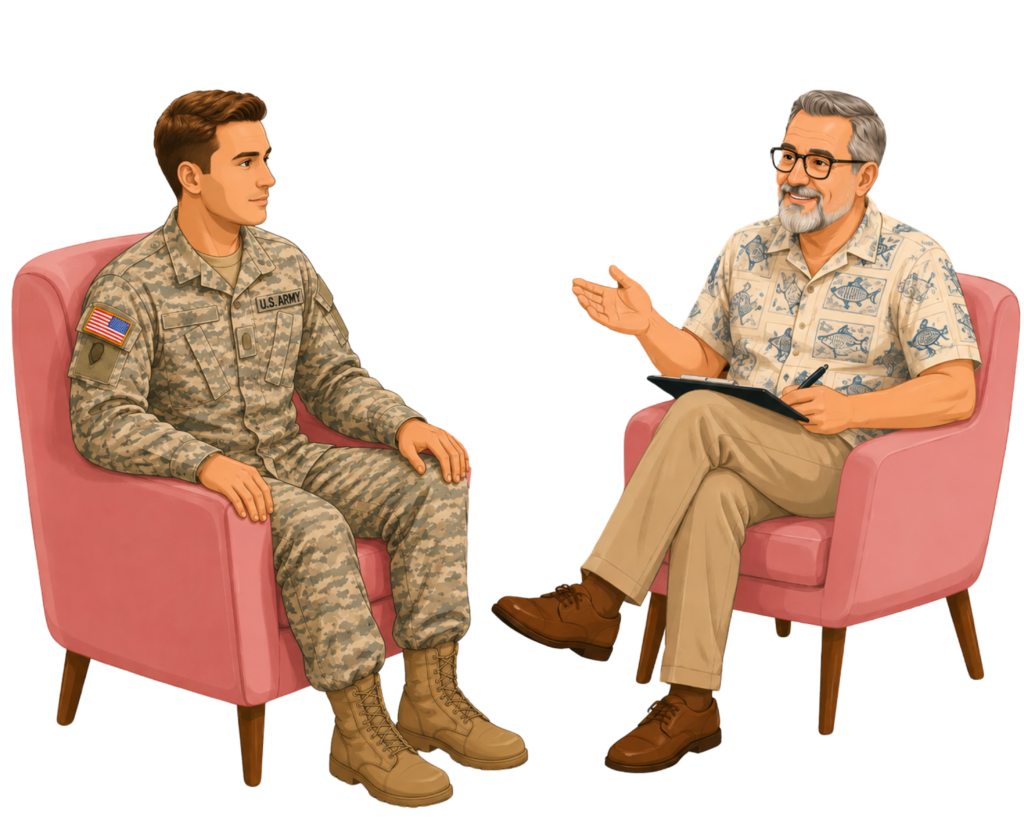
What Combat Leaves in the Body Long After It's Over
Combat doesn’t end when the deployment does. That’s the part nobody quite prepares you for. You come home, you settle back into a routine, and then six months later you’re gripping the steering wheel a little too hard because a car backfired somewhere down the street.
I work with veterans carrying combat trauma here in Oregon, and I’ll tell you upfront, there’s no single shape to it. Some of it lives in specific memories that replay uninvited. Some of it is quieter than that, a kind of low static that never fully clears. A few guys I’ve talked with can’t point to one moment at all. It’s more like the accumulated weight of a year, or two, or three, that never got put down.
None of that makes you damaged. It makes you someone whose nervous system did exactly what it was built to do in a place that demanded it, and hasn’t quite figured out how to stand down.
Where Combat Trauma Tends to Show Up
Some of this you'll recognize right away. Some of it sneaks up sideways, through your relationships or your patience or your sleep, and it takes a while to connect the dots back to what happened overseas.
- Flashbacks or memories that intrude without warning
- Hypervigilance, that constant low-grade scanning for threat
- Startle responses to loud noises, sudden movement, crowds
- Nightmares or sleep that never feels like real rest
- Anger that flares faster and harder than it used to
- Emotional numbness, feeling shut off from people you love
- Survivor's guilt tied to who made it home and who didn't
- Difficulty being around crowds or feeling boxed in
- Trouble trusting anyone who wasn't there with you
- Replaying decisions made in split seconds, wondering if they were right
- A hard time feeling present, even in good moments
- Strain on marriages, friendships, and parenting
Combat Coaching Grounded in Real Military Experience
An autism evaluation uses evidence-based measures and typically includes:
I served four years on Navy submarines during the Cold War. That’s not combat in the way most people picture it, and I won’t pretend it gives me the same lived experience as someone who’s been shot at. What it gave me was a front-row seat to how people hold together, or don’t, under sustained pressure in a closed environment with no easy way out. That matters more than people expect.
- Four years of Navy submarine service, Cold War era
- Trained in contemplative coaching methods
- Real understanding of military structure and culture
- Comfortable with silence and comfortable with hard subjects
- Faith-informed approach available, never pushed on anyone
- No need to over-explain your service
- In-person sessions in Gladstone, or online if that works better for you
Combat trauma recovery isn’t a straight line. Some weeks feel like progress. Some weeks feel like you’re right back where you started. Both are part of it.
What Our First Session Actually Looks Like
Growing Prevalence and the Power of Early Intervention
I won’t hand you a form. I’ll ask what’s been going on, and then I’ll listen, without steering the conversation toward whatever conclusion I’ve already decided you need to reach. Some veterans want to get into specifics right away, the deployment, the incident, the thing that keeps surfacing. Others need a few sessions just building trust before any of that comes up. There’s no wrong pace here.
I also want to be straight with you about something. Coaching isn’t therapy, and it isn’t a replacement for clinical treatment if that’s genuinely what your situation calls for. I’m not going to diagnose PTSD or treat it the way a licensed clinician would. If I think you need that level of care, I’ll say so, and I’ll help point you toward it.