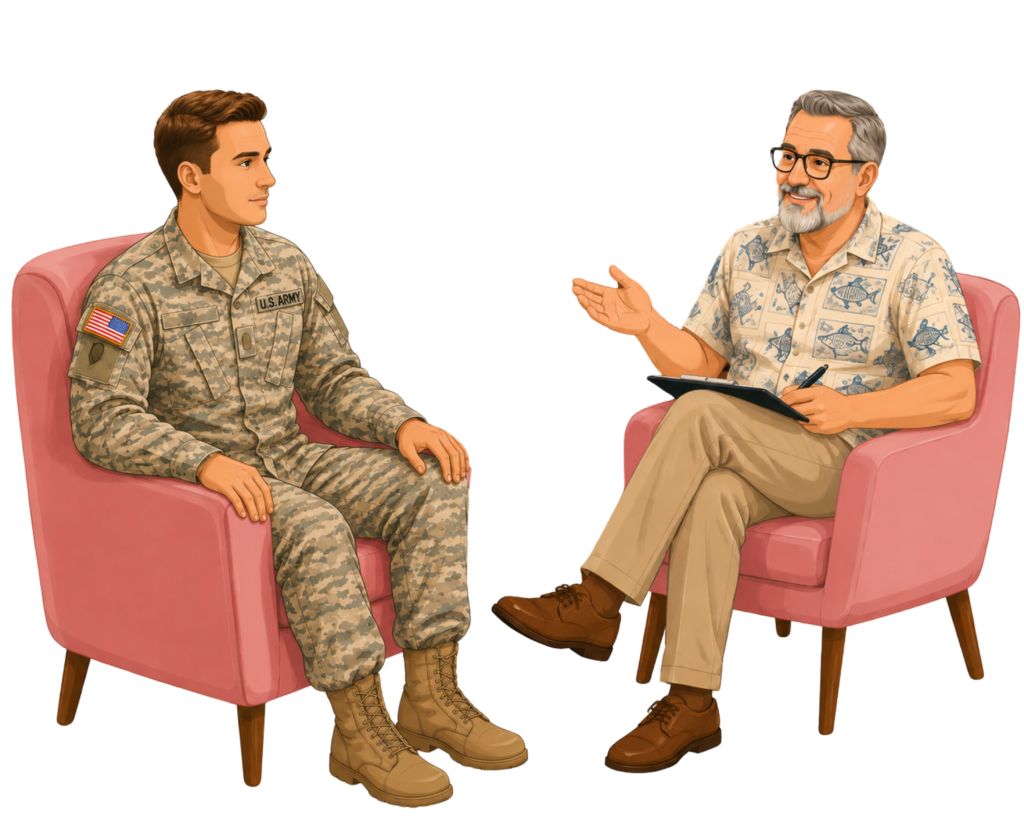
When Work Stress Starts Affecting Life
First responders are trained to stay focused when other people are overwhelmed. You learn to assess situations, make decisions, control your reactions, and keep moving. Those skills matter on the job. But staying in that mode for years can make it difficult to know how to switch off when you get home.
You may find yourself carrying work into your evenings without realizing it. Maybe you have less patience with the people you care about, struggle to relax, or feel like your mind is always preparing for the next problem. Sometimes the hardest part is not knowing what you need because you have spent so much time taking care of everyone else.
As a mental health coach for first responders in Oregon, I provide a place where you do not have to perform, explain the culture, or pretend everything is fine. We can look at the patterns affecting your work, relationships, emotions, and life outside the uniform.
Mental health coaching is not about telling you how you should feel. It is about helping you understand where you are, what may be getting in the way, and what kind of life you want to build from here.
Areas We Can Work Through Together
Mental health does not look the same for every first responder. Coaching can focus on whatever part of your life feels difficult, stuck, or out of balance. Our conversations may include:
- Managing accumulated occupational stress
- Learning how to mentally leave work at work
- Recognizing emotional patterns before they take over
- Building healthier responses to frustration and anger
- Improving communication at home
- Reconnecting with your spouse or family
- Creating boundaries between professional and personal life
- Creating boundaries between professional and personal life
- Adjusting to retirement or career changes
- Rebuilding routines that support your well-being
- Working through self-doubt and difficult decisions
- Developing greater self-awareness and emotional control
My Military Experience and Coaching Approach
An autism evaluation uses evidence-based measures and typically includes:
My coaching approach combines that lived experience with contemplative coaching methods. I listen for what may be underneath the immediate problem and create room for honest conversations about the parts of life that are often pushed aside.
- Four years of Navy submarine service
- Experience with high-pressure service environments
- Training in contemplative coaching methods
- Experience supporting people through difficult conversations
- Faith-informed coaching when appropriate
- A private, judgment-free space
- In-person and online sessions available
You do not need to convince me that the job is demanding. I understand that some things are easier to talk about with someone who has experienced the expectations, pressure, and culture of service firsthand.
A Different Approach to Mental Health Support
Growing Prevalence and the Power of Early Intervention
Our first conversation starts with where you are now. There is no requirement to arrive with a diagnosis, a perfectly defined problem, or a list of things you need to fix. You can tell me what has been bothering you, what has changed, or simply what made you decide it was time to talk.
From there, coaching can help you identify patterns, clarify what matters to you, and develop practical ways to approach the challenges in front of you. We may talk about relationships, stress, identity, boundaries, purpose, emotional habits, or what life looks like after years of putting the job first.
Mental health coaching is different from clinical mental health treatment. I do not diagnose or treat PTSD, depression, anxiety, or other mental health conditions. If what you are experiencing requires clinical care, I will be direct about that and encourage you to connect with an appropriate licensed professional. Coaching can work alongside professional care when appropriate.