Are the new ways better?
Trauma isn’t just something that happened. For many people, it’s something the brain and body are still responding to long after the original event has passed. The intrusive memories, the hypervigilance, the emotional reactions that seem disproportionate to what’s happening in the present moment, these aren’t character flaws or signs of weakness. They reflect real changes in how the brain processes danger, emotions, and stress after traumatic experiences. Understanding how trauma affects the brain helps explain why moving on isn’t simply a matter of deciding to. It also opens the door to understanding how structured support, including trauma coaching, can help people build healthier patterns over time.
How Trauma Changes the Brain
The brain’s response to trauma isn’t random. It involves specific regions that handle threat detection, memory, and emotional regulation, and trauma affects each of them in ways that continue shaping a person’s experience long after the danger has passed.
Trauma Can Keep the Brain in Survival Mode
The nervous system is designed to respond to threats with speed. Fight, flight, freeze, or fawn responses are automatic, and they’re genuinely useful when danger is real and immediate. The problem with trauma is that these responses can become default settings even when the original threat is gone. The brain learned that danger exists, and it keeps scanning for it. Remaining constantly alert, startling easily, and finding it hard to truly relax aren’t irrational. They’re the nervous system doing exactly what trauma taught it to do.
The Amygdala and Trauma Response
The amygdala is the brain’s primary threat detection system. When it perceives danger, it triggers the stress response almost instantly, before conscious thought has a chance to intervene. After trauma, the amygdala can become hyperreactive, treating neutral or ambiguous stimuli as threatening. This is why someone who has experienced trauma might feel suddenly flooded with fear in situations that seem perfectly ordinary from the outside. The fear response is firing, and it’s genuinely difficult to reason your way out of it in the moment.
The Hippocampus and Traumatic Memories
The hippocampus plays a central role in organizing memories and placing them in context, helping the brain understand that an experience belongs in the past. Chronic stress associated with trauma can affect hippocampal function, which is one reason traumatic memories sometimes feel fragmented, unusually vivid, or disturbingly present rather than belonging clearly to a specific point in time. Flashbacks and intrusive memories reflect this disruption in how the brain stores and retrieves traumatic experiences.
The Prefrontal Cortex and Emotional Regulation
The prefrontal cortex handles reasoning, decision-making, and the regulation of emotional reactions. Under significant stress or when a trauma trigger activates the amygdala, the prefrontal cortex’s influence effectively decreases. This is why people experiencing a trauma response find it genuinely hard to think clearly, make decisions, or calm themselves through rational thought. The emotional brain has taken the wheel, and the reasoning brain is along for the ride.
How Trauma Can Affect Thoughts, Emotions, and Behavior
Brain changes after trauma don’t stay contained to neuroscience. They show up in daily life in ways that affect relationships, work, sleep, and a person’s sense of who they are.
Difficulty concentrating or making decisions is common, as is increased anxiety and hypervigilance that make ordinary situations feel loaded with potential threat. Emotional numbness or detachment can develop as the nervous system’s way of managing overwhelming input. Sleep problems and persistent stress reflect a system that won’t fully switch off. Strong reactions to specific triggers, sounds, smells, situations, that seem inexplicable to others but feel completely real to the person experiencing them. Negative thoughts about oneself or others, a pervasive sense that the world is unsafe or that something is fundamentally wrong with you. These are symptoms of how trauma changes the brain, not reflections of personal failure.
Can Trauma Change the Way You Think?
Yes, and meaningfully so. Traumatic experiences can shape thought patterns in ways that persist well beyond the original event. Expecting danger, difficulty trusting others, self-blame, and a chronic sense that something bad is about to happen are all common cognitive effects of trauma. The brain learned these patterns in response to real experience, which is why they feel true rather than distorted, and why changing them requires more than deciding to think differently.
Emotional reactions during triggering situations can feel completely out of proportion because they’re being driven by the threat response rather than a rational assessment of the present moment.
How Trauma Affects the Nervous System
The brain and nervous system operate together, and trauma affects both. The body can react to a trigger before conscious understanding catches up. A racing heart, sudden nausea, the impulse to leave a room, these physical responses can arrive in a fraction of a second, driven by the nervous system’s threat detection machinery rather than any deliberate choice.
Fight, flight, freeze, and fawn responses become conditioned over time. Situations, relationships, or environments that resemble aspects of the original trauma can activate the same physiological response that the trauma itself produced. This is why trauma recovery isn’t primarily about thinking your way out of it. The nervous system needs to learn new responses, and that takes time, repetition, and the right kind of support.
Can the Brain Recover After Trauma?
The brain has a quality called neuroplasticity, the capacity to form new connections and adapt in response to experience. This doesn’t mean trauma simply reverses itself, and it’s worth being clear that coaching alone doesn’t rewire the brain in some dramatic, comprehensive way. What it does mean is that new patterns of thought, behavior, and emotional response are learnable over time with consistent effort and appropriate support.
Building new responses takes repetition and a degree of safety in which to practice them. Healthy daily routines, meaningful social connection, stress management, and working with the right professional all contribute to creating conditions where the nervous system can gradually learn that the original threat has passed.
How Trauma Coaching Can Help
Identifying Trauma-Related Thought Patterns
A trauma-informed coach helps clients recognize the specific thought patterns that trauma has created, the beliefs, assumptions, and automatic reactions that were shaped by past experience and may be limiting present choices.
Recognizing Triggers and Emotional Responses
Understanding what activates a stress response, and why, gives people more options. Awareness precedes change, and coaching creates structured space for developing that awareness without clinical diagnosis.
Building Healthier Coping Strategies
Coaching supports the development of practical tools for managing stress, emotional reactions, and difficult situations, strategies that work with the nervous system rather than against it.
Developing Emotional Awareness
Many people who have experienced trauma have learned to disconnect from their emotional experience. Coaching gently supports greater awareness of internal states, which is foundational to building healthier responses over time.
Setting Personal Goals After Trauma
Trauma can narrow a person’s sense of what’s possible for them. Goal-setting in coaching helps rebuild a relationship with the future that trauma may have made feel uncertain or unsafe.
Creating Structure and Accountability
Regular coaching sessions provide the consistency and accountability that makes change more achievable than working on these patterns alone.
What Does a Trauma Coach Do?
A trauma coach works alongside clients on goal-setting, pattern identification, coping strategy development, accountability, confidence building, and improvements to daily routines. The work is forward-focused and practical rather than clinically oriented.
Coaching is not therapy. A trauma coach does not diagnose conditions, treat mental health disorders, or provide clinical intervention. The distinction matters and any reputable coach will be clear about it. Coaching can be genuinely valuable for people who want structured support in working toward healthier patterns, but it’s not a substitute for clinical mental health treatment when that’s what the situation requires.
Trauma Coaching vs. Trauma Therapy
Trauma Coaching | Trauma Therapy |
Focuses on goals and forward progress | Can treat mental health conditions and trauma disorders |
Provides structure and accountability | Uses clinical therapeutic approaches |
Supports personal development | Provided by licensed mental health professionals |
Not a replacement for clinical treatment | Appropriate for clinical symptoms and diagnoses |
People experiencing severe symptoms, recurring flashbacks, significant functional impairment, thoughts of self-harm or suicide, or substance misuse as a coping mechanism should seek support from a qualified mental health professional. These situations require clinical care, not coaching.
Who May Benefit From Trauma Coaching?
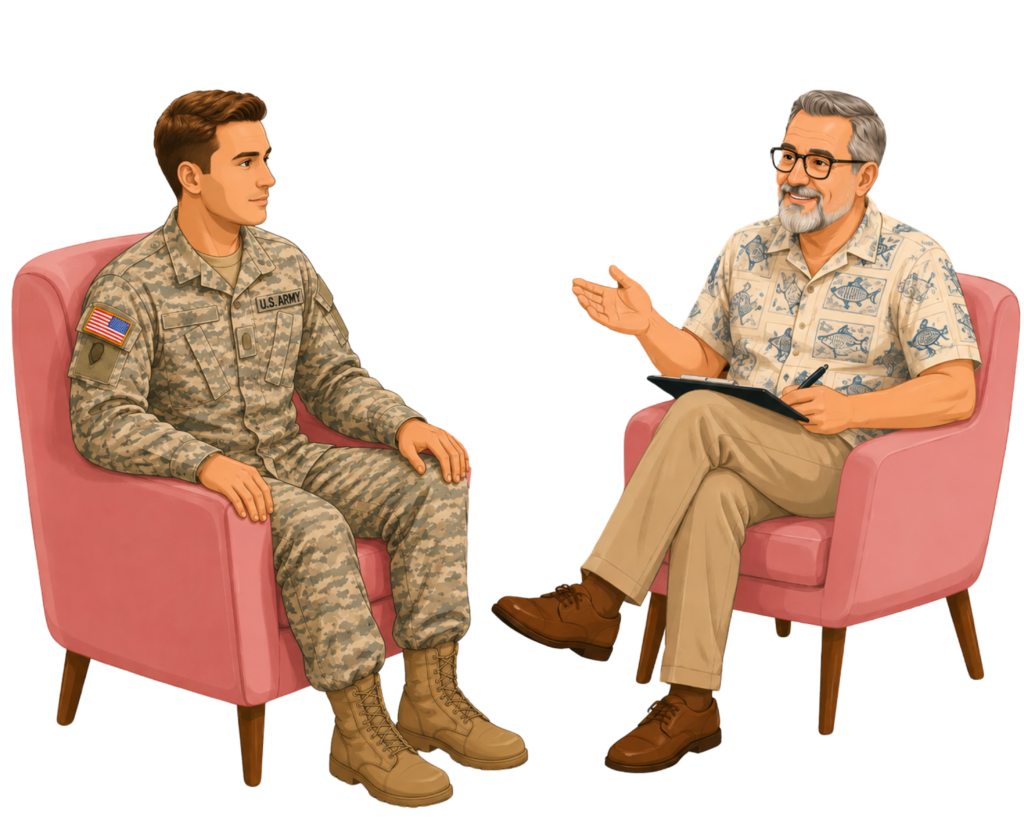
Veterans coaching navigating life after service. First responders managing the cumulative effects of trauma exposure. People who have completed therapy and want ongoing support working toward personal or professional goals. People struggling with confidence, relationship patterns, or daily function in the aftermath of traumatic experiences. Those who want structured accountability as they work to build healthier habits and responses.
Coaching isn’t appropriate for everyone with trauma history, particularly those with severe or active clinical symptoms. An honest coach will assess fit carefully and refer to appropriate clinical support where needed.
When Should You Consider Professional Mental Health Support?
Persistent or worsening symptoms that don’t respond to self-management. Severe anxiety or panic affecting daily function. Recurring flashbacks or intrusive memories. Inability to maintain normal daily activities. Thoughts of self-harm or suicide require immediate professional or emergency support. Substance misuse as a primary coping mechanism. Severe sleep disruption that has persisted for weeks.
These situations call for a licensed mental health professional, not a coach. Coaching can complement appropriate clinical care in some cases, but it cannot and should not replace it.
How to Start Moving Forward After Trauma
Learning your triggers, understanding what activates your stress response and why, is a useful starting point. Building consistent daily routines creates predictability that the nervous system responds well to. Practice healthy stress management through movement, breathing, and activities that genuinely restore your energy. Setting small, realistic goals that build evidence for what you’re capable of. Building a support system of people who understand and respect your experience. And working with the right professional, whether that’s a therapist, a trauma-informed coach, or both, based on what your situation actually requires.
How Trauma Coaching Can Support Your Next Steps
If you’re at a point where you understand something of what trauma has done to your patterns and you’re ready to work actively toward change, trauma coaching offers a structured, accountable path forward. Identifying the thought patterns and emotional responses that are no longer serving you, building practical coping strategies, setting meaningful goals, and developing the consistency needed to actually change long-standing habits. These are the things a trauma coach works on alongside you.
Healing from trauma is rarely linear and rarely simple. But with the right support, new patterns are possible.
Frequently Asked Questions
Trauma affects the amygdala, hippocampus, and prefrontal cortex in ways that alter threat detection, memory processing, and emotional regulation. These brain changes explain many of the persistent symptoms people experience after traumatic events.
The brain can become sensitized to perceived threats, memory processing is disrupted, and the capacity to regulate emotional responses is reduced. These changes reflect the nervous system’s adaptation to traumatic experience.
Trauma produces real brain changes, but the brain also has neuroplasticity, the capacity to form new patterns over time. With consistent support and appropriate intervention, many people experience meaningful recovery, though outcomes vary considerably.
For many people, yes. Neuroplasticity means new patterns of response are learnable over time. Recovery typically requires consistent effort, appropriate support, and in many cases professional guidance.
Yes. Trauma can produce fragmented, unusually vivid, or intrusive memories that feel disturbingly present rather than clearly located in the past. This reflects disruptions in how the hippocampus processes and contextualizes traumatic experiences.
Getting Support for PTSD in First Responders
PTSD in first responders is common, underreported, and treatable. Recognizing the warning signs, understanding the risk factors, and knowing when symptoms have crossed from manageable to something that requires professional attention are all meaningful steps. Emergency personnel carry an enormous amount so that others don’t have to. That service doesn’t require suffering in silence. Anyone experiencing persistent PTSD symptoms is encouraged to speak with a qualified mental health professional who can provide appropriate, individualized support.
Positive Motivators
- Henry Wadsworth Longfellow, The Contemplative Counselor; Fortress Press, 2011, p 64
- New American Standard Bible: 1995 update. (1995). (Jn 16:13). La Habra, CA: The Lockman Foundation.
- Ibid, Psalm 46:10
- Nolasko, Rolph R. jr; The Contemplative Counselor; Fortress Press, 2011; p 61
- Ibid
- LifeCrafters Coaching & Support Services LLC
- www.lccoach.org
- david.hooker@lccoach.org
- 503-344-6348
Speaking with clarity and honesty creates space for understanding and meaningful connection.

Author, David Hooker
Timing matters. Important conversations are most productive when both partners are calm, available, and emotionally regulated. Avoid raising sensitive topics during moments of stress or exhaustion. Creating intentional space for conversations allows both partners to engage thoughtfully and respectfully.
Handle Conflict Constructively
Disagreements are normal in any relationship. Focus on addressing the issue rather than criticizing your partner. Stay curious about their perspective, take responsibility for your part, and avoid absolutes like “always” or “never.” Working as a team toward solutions strengthens resilience and mutual respect.
Show Appreciation and Affection
Positive communication isn’t just about resolving problems—it’s also about reinforcing connection. Regularly expressing gratitude, affection, and acknowledgment helps your partner feel valued. Small gestures of appreciation can soften difficult conversations and create a more supportive emotional climate.
Bringing It All Together
Improving communication takes time, patience, and practice from both partners. By listening with intention, speaking honestly, choosing the right moments, managing conflict thoughtfully, and showing appreciation, you create a stronger foundation for connection. Small, consistent changes in how you communicate can lead to deeper understanding, greater emotional safety, and a more fulfilling relationship.